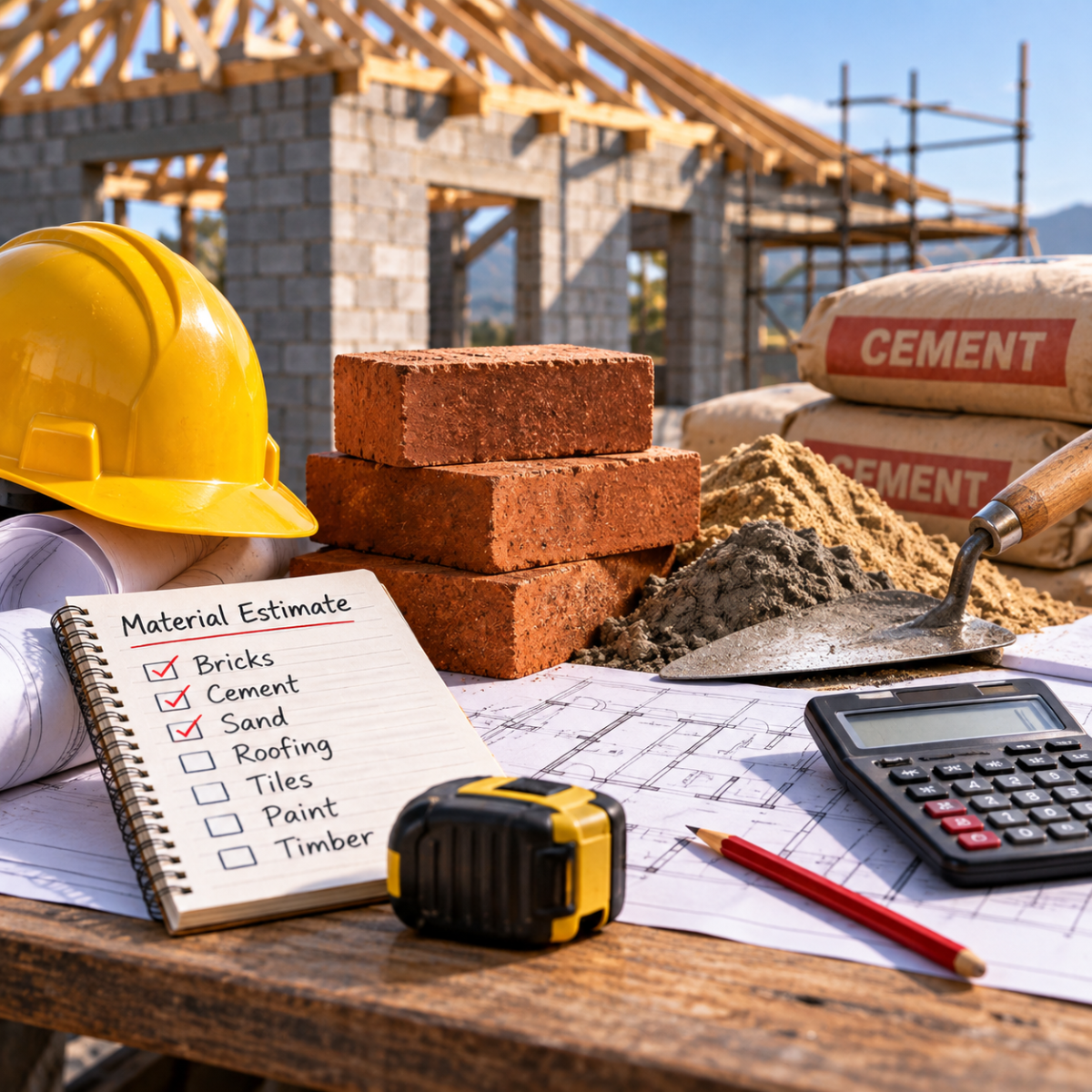
Estimating the right quantities of building materials is one of the most important steps when planning a construction, renovation or DIY project. Ordering too little can cause delays, while buying too much can increase your costs and leave you with unnecessary materials.
For homeowners, contractors and DIY builders, Building Material Estimation in Gansbaai can make planning a project much easier.
By calculating quantities carefully before you buy, you can create a more accurate budget, reduce waste and make sure the materials you need are available when you need them.
Whether you are building a wall, renovating a room, paving an outdoor area or tackling a larger construction project, a little preparation can make a significant difference.
Avoid Overbuying or Shortages
The goal of a good material estimate is simple: purchase enough material to complete the project without unnecessarily overbuying.
However, estimating quantities is not always as straightforward as it may seem.
Different materials are measured in different ways, and wastage, cutting, breakages and changes to the project can all affect the final quantity required.
Start with Accurate Measurements
Before calculating how much material you need, measure the area carefully.
For example, if you are estimating materials for a rectangular floor, you can calculate the area by multiplying:
Length × Width = Area
If a room is 5 metres long and 4 metres wide:
5 m × 4 m = 20 m²
This gives you the basic area that needs to be covered.
For walls, you will generally need to calculate the wall area and then account for openings such as doors and windows.
Accurate measurements are particularly important when purchasing materials such as:
- Bricks and blocks
- Tiles
- Paving
- Flooring
- Roofing materials
- Plasterboard
- Paint
- Timber
- Insulation
- Cement and other construction materials
Allow for Material Waste
Even with careful measurements, you should generally allow for some wastage.
Materials can be cut incorrectly, damaged during handling or unsuitable for use because of variations in size or condition.
Certain products also require additional material because of cutting patterns.
For example, when purchasing tiles, it is common to allow extra material for cuts and breakages.
The amount required depends on the size and shape of the area and the complexity of the layout.
The same principle applies to timber, paving, roofing and other materials where cutting is involved.
However, avoid simply adding a large percentage to every material. The appropriate allowance depends on the specific product and project.
Consider the Complete Project
Another common problem is estimating materials for one part of a project without considering everything required to finish it.
For example, building a new wall may require more than bricks alone. You could also need:
- Cement
- Sand
- Mortar
- Reinforcement materials
- Damp-proofing materials
- Wall ties or related products
- Tools and equipment
- Finishing materials
Therefore, create a complete project checklist before purchasing.
This approach can help you avoid making multiple trips to the store and reduce the risk of discovering halfway through the project that an essential material has been overlooked.
Tools and Apps to Help Estimate
Technology can make Building Material Estimation in Gansbaai easier, particularly for projects involving multiple measurements and material types.
There are numerous calculators, spreadsheets and construction estimation apps available.
However, these tools should support your planning rather than replace accurate measurements and product-specific calculations.
Use Online Calculators Carefully
Online calculators can be useful for estimating quantities such as:
- Concrete
- Bricks
- Blocks
- Tiles
- Paint
- Flooring
- Paving
- Roofing materials
Typically, you enter measurements such as length, width and depth, and the calculator provides an estimated quantity.
However, remember that calculators may use standard assumptions.
The actual quantity required can vary depending on the product, installation method, site conditions and amount of wastage.
Create a Simple Materials Spreadsheet
For larger projects, a spreadsheet can be one of the easiest ways to keep track of your requirements.
Create columns for:
| Material | Estimated Quantity | Unit | Allowance | Total Required |
| Bricks | Each | |||
| Cement | Bags | |||
| Sand | m³ | |||
| Timber | Lengths | |||
| Tiles | m² | |||
| Paint | Litres |
You can then add prices to create an initial project budget.
This is particularly helpful when comparing different options or planning a renovation in stages.
Keep Your Measurements Together
Whether you use an app, spreadsheet or notebook, keep all your measurements in one place.
Record:
- Room dimensions
- Wall dimensions
- Door and window sizes
- Floor areas
- Ceiling areas
- Roof measurements
- Quantities already purchased
- Quantities still required
Keeping accurate records makes it easier to adjust your calculations if the project changes.
Common Mistakes to Avoid
Even a well-planned project can encounter problems if material quantities are estimated incorrectly.
Fortunately, many of the most common mistakes can be avoided with a systematic approach.
1. Guessing Instead of Measuring
One of the biggest mistakes is estimating by eye.
A wall may look like it requires a certain number of bricks, but even a small measurement error can become significant over a large area.
Therefore, measure first and calculate afterwards.
2. Forgetting Openings
When calculating wall areas, remember to account for doors and windows.
Otherwise, you may purchase more material than necessary.
At the same time, don’t automatically deduct every opening without considering how the materials will actually be used.
Cutting patterns and minimum purchase quantities can still affect the final requirement.
3. Ignoring Waste
Some wastage is unavoidable.
Tiles may need to be cut around corners and fittings. Timber may need to be cut to different lengths.
Bricks and blocks can also suffer breakages during handling.
Consequently, ordering the exact mathematical quantity without an appropriate allowance can leave you short.
4. Using the Wrong Product Calculation
Different products have different coverage rates.
For example, one paint product may cover a different area per litre from another. Similarly, different tile sizes can affect the number of tiles required, even when the total floor area remains the same.
Always check the manufacturer’s coverage information and product specifications where available.
5. Forgetting Thickness and Depth
Area alone is not enough for certain materials.
Concrete, screed, foundations and other applications may require calculations based on length, width and depth.
For example:
Length × Width × Depth = Volume
If you are unsure which measurements are required for a particular material, ask before purchasing.
6. Buying Everything Too Early
It can be tempting to purchase all the materials at the beginning of a project.
However, storage space, weather exposure and changes to the project can create problems.
Some materials may need to be protected from moisture, while others can take up considerable space.
Where practical, plan purchases around the different stages of the project.
7. Not Checking Product Availability
Your calculations may be correct, but that does not necessarily mean the exact quantity or product is immediately available.
Therefore, it is worth checking material availability before finalising your project schedule.
This is especially important for larger projects where running short of a key material could delay progress.
Let Build it Gansbaai Help You Plan
Good Building Material Estimation in Gansbaai starts with accurate measurements and a clear understanding of what your project requires.
At Build it Gansbaai, customers can discuss their building material requirements with the knowledgeable in-store team.
Whether you are working on a home improvement, renovation, DIY project or new build, having a clear materials list can make purchasing easier and help you plan your budget more effectively.
It is also useful to bring your measurements with you when visiting the store.
Depending on your project, information such as room dimensions, wall sizes, quantities required and product specifications can help the team understand what you are trying to achieve.
Prepare Before You Visit
To make the most of your visit, consider bringing:
- Your project measurements
- A basic drawing or plan
- Door and window dimensions
- The type of materials you intend to use
- Your estimated quantities
- Photographs of the area, where useful
- Any relevant product information
The more information you have, the easier it is to work through your material requirements.
Build Your Budget Around Accurate Quantities
Once you have a realistic materials list, you can start developing a more accurate project budget.
Remember to consider not only the main construction materials but also associated products, consumables and finishing materials.
For example, a painting project may require more than paint.
You could also need primer, brushes, rollers, trays, masking materials, filler and suitable preparation products.
Likewise, a paving project may require preparation materials, edging and other associated products in addition to the paving itself.
Planning these requirements in advance helps reduce surprises later.
Plan Your Gansbaai Building Project with Confidence
Whether you are undertaking a small DIY improvement or planning a larger building project, accurate material quantities can save time, reduce unnecessary expenditure and help your project run more smoothly.
By measuring carefully, using suitable calculation tools, allowing for reasonable wastage and checking product requirements, you can avoid many of the common problems associated with material shortages and overbuying.
Most importantly, you do not have to plan everything alone.
Build it Gansbaai can help you work through your building material requirements in-store, giving you a convenient local starting point for your project planning.
Get Your Building Materials Estimate Started
Visit Build it Gansbaai with your measurements and project requirements for free estimation help in-store. Plan carefully, buy more confidently and get the materials you need for your next project.